Black Friday 2026 will take place on Friday, November 27, followed by Cyber Monday on November 30. But Black Friday campaign performance is built several weeks before these dates, as brands begin launching their offers and competition gradually intensifies.
According to Salesforce, Black Friday 2025 generated $79 billion in global sales, up 6% year over year. Across Cyber Week, 70% of online orders were placed on mobile.
To capture this demand without sacrificing profitability, advertisers need to plan their tests early, maintain consistency across the customer journey, and manage investments based on more than media costs alone.
Key Takeaways
- Start testing early and scale campaigns progressively.
- Manage budgets based on profitability, not just media costs.
- Combine new customer acquisition with re-engagement.
- Align offers, creative, and the entire customer journey.
- Make sure measurement is reliable before investment peaks.
When Should You Launch Your Black Friday Campaigns?
Waiting until Black Friday week to launch your campaigns means entering the most competitive period without knowing what works. Initial tests should start several weeks earlier to validate offers, audiences, and creative concepts, while giving algorithms enough conversion signals to learn.
In 2025, 26% of consumers surveyed across nine countries had already started their holiday shopping by the end of September, according to Shopify
Key Dates
- Mid-October: test offers, audiences, and creative concepts.
- Late October to mid-November: keep the best-performing combinations and gradually increase investment.
- Black Friday week: concentrate budgets on validated campaigns and reallocate spend based on profitability.
- After Cyber Monday: keep high-performing campaigns running as CPMs begin to decline.
This timeline should be adapted to your usual conversion volume: the lower the volume, the earlier the testing and learning phase should begin.
How Should You Adjust Budgets as Black Friday Costs Rise?
Higher media costs during Black Friday aren’t, on their own, a reason to reduce investment. Budgets can continue to increase as long as campaigns remain within the CPA, ROAS, or margin thresholds defined upfront.
Across a sample of 1,247 Meta e-commerce accounts, MHI Growth Engine reported CPMs 41% above the annual average in November 2025. Addict Mobile data from the past three years shows a 50% to 100% increase between November 1 and Black Friday but also purchase conversion rates up to three times higher.
Un coût média plus élevé peut donc rester rentable lorsque la progression des conversions le compense. Pour un client retail, l’augmentation des investissements pendant le Black Friday a notamment permis de réduire le CPI et d’augmenter le ROAS.
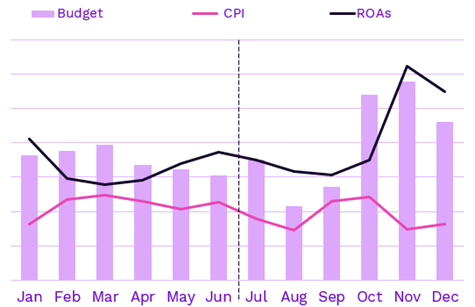
Setting budget caps too strictly can mean missing out on audiences ready to convert. Increase investment gradually as long as profitability holds, then continuously adjust how budgets are allocated.
How Should You Structure Your Acquisition Strategy?
Black Friday creates a dual opportunity: acquiring new users who are particularly receptive to offers and re-engaging audiences already familiar with the brand. The strategy should therefore combine acquisition, branding, and retargeting, with messaging tailored to each audience.
Combine Branding and Acquisition
Branding campaigns help expand reach and unlock new audience segments. Performance campaigns can then turn that visibility into installs, sign-ups, or purchases.
This is the approach taken by a photography industry player supported by Addict Mobile. Despite rising CPMs at the end of the year, combining branding and performance campaigns helped the brand diversify its audiences, meet its acquisition targets, and increase its number of monthly active users.
Re-Engage Existing Audiences
Retargeting helps convert audiences already familiar with the brand: recent visitors, cart abandoners, previous buyers, or inactive users.
According to AppsFlyer, remarketing campaigns increase the install-to-purchase conversion rate by 118% on iOS and 177% on Android compared with campaigns without remarketing. To make the most of this opportunity, activations should be tailored to each audience:
- Visitors and cart abandoners: bring back the products they viewed or left in their cart, with direct access to the offer.
- Previous Black Friday buyers: promote complementary products, a new offer, or an exclusive benefit for existing customers.
- Inactive users: use past behavior to select an offer likely to reignite interest.
- New users: follow up on the acquisition campaign with messaging designed to drive a first purchase quickly.
Coordinate paid retargeting, email, push, and CRM while excluding users who have already converted. The goal isn’t to increase the number of touchpoints, but to deliver the right message at the right time without overwhelming your audience.
What Creatives Should You Produce for Black Friday?
During Black Friday, simplicity and clarity often outperform overly elaborate concepts. With promotions everywhere, creative should immediately communicate the product, the benefit, and the reason to act now.
A discount on a black background isn’t enough. Put what truly differentiates the offer front and center: price, discount, exclusivity, free shipping, or a specific benefit. Maintain visual consistency across ads, website, app, and app store pages. Black Friday codes should reinforce the moment without overshadowing the brand identity.
Then adapt production to each format and platform:
- Short videos, vertical formats, and Stories: prioritize formats under 15 seconds, showing the product in use, the offer from the opening hook, and a clear CTA.
- Static creatives: immediately show the product, price, or discount. Cheaper to produce and adapt, they can also be more profitable when a strong promotion is enough to drive conversion.
- UGC: adapt the messaging and editing to TikTok, Snapchat, or Reels codes to showcase product use more naturally.
- Carousels and catalog formats: showcase multiple products or categories without overcrowding a single creative.
Before the peak, test the message hierarchy, featured product, and offer wording. Once a concept is validated, iterate on it rather than starting from scratch.
Hook Rate and Hold Rate help measure attention. CTR, conversion rate, and revenue determine actual performance. A high CTR followed by few purchases may indicate an overly aggressive promise or a disconnect between the ad and the final offer.
Why Should You Prepare Your Product Catalogs and DPA in Advance?
Dynamic Product Ads (DPA) automatically display the most relevant products based on each user’s behavior: product views, add-to-cart actions, or abandoned purchases. During Black Friday, they make personalization at scale easier, provided your catalog is accurate and up to date.
Before launch, check:
- prices, promotions, and stock levels
- automatic exclusion of out-of-stock products
- consistency between product IDs and the events sent to the platforms
- proper functioning of product page links, including deep links and deferred deep links.
The journey should remain direct: a product ad should lead to the advertised offer, not the homepage. It’s also better to create product sets based on priority categories, stock levels, or margins rather than activating the entire catalog without distinction.
How Should You Adapt Your App Store Pages for Black Friday?
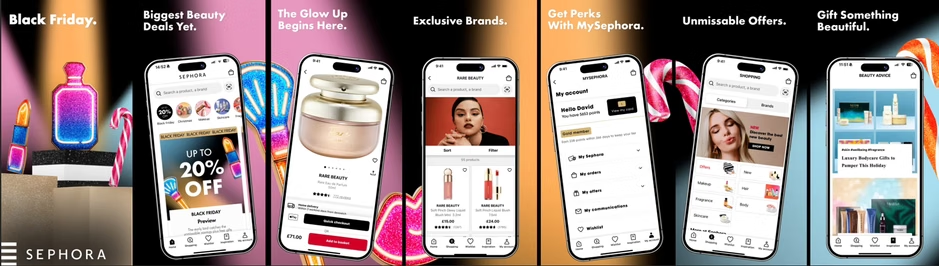
A Black Friday campaign shouldn’t lead to a generic app store page. The offer and Black Friday visual codes should appear in the first elements users see to maintain journey consistency and encourage downloads.
On iOS, Custom Product Pages (CPP) allow you to create up to 70 versions tailored to specific content or audiences. When associated with keywords, they can appear in search results and support both paid and organic acquisition. Apple reports an average 2.5 percentage point increase in conversion rate compared with default product pages.
To prepare for the period:
- Create dedicated CPPs for the offers, categories, or audiences receiving the most investment, with specific screenshots, video, and copy.
- Apply the same approach on Google Play with Custom Store Listings linked to a specific URL or Google Ads campaign.
- Update your iOS promotional text and feature the offer in the first screenshot or video.
- Plan production and approval ahead of time. The platform allows you to create many pages, but the real challenge is producing enough consistent, segment-specific assets early enough.
If the offer includes temporary content or an experience genuinely available within the app, an In-App Event can also increase its visibility among both new and existing users.
How Can You Ensure Reliable Measurement and Optimize Campaigns?
Le Black Friday n’est pas le moment de découvrir qu’un événement d’achat remonte mal ou qu’un deep link ne foBlack Friday isn’t the time to discover that a purchase event isn’t being tracked correctly or that a deep link doesn’t work. Before increasing investment, test the entire journey under real conditions, from the ad through to order confirmation.
In particular, check:
- tracking of key events: product view, add to cart, sign-up, and purchase
- the value, currency, and ID of each transaction to prevent duplicates
- links and deep links
- data consistency across advertising platforms, attribution tools, and business data
Campaigns should be optimized toward events closest to revenue. High volumes of installs, visits, or add-to-cart actions don’t guarantee profitability if purchases don’t follow.
How to Manage Your Campaigns
- Compare like with like: align events and attribution windows before comparing results across Meta, TikTok, and Google.
- Allocate based on value generated: look at ROAS, but also margin, revenue, and the share of new customers. When organic demand is high, not all revenue attributed to campaigns is necessarily incremental.
- Account for delayed conversions: adjust budgets during the peak, then allow time for conversions to be reported before assessing final performance.
Conclusion
A profitable Black Friday strategy isn’t about concentrating budgets over just a few days. It relies on campaigns tested in advance, offers that are immediately clear, a consistent customer journey, and measurement that distinguishes volume from the value actually generated.
Higher costs can be absorbed if investment grows alongside conversions and profitability. The priority remains the same: plan ahead, scale what works, and keep optimizing after the peak.
Black Friday FAQ
When should you start promoting Black Friday?
The strategy should be defined several weeks before the event, but you don’t need to activate full promotional pressure immediately. Use October to test audiences, offers, and creatives. Teasers and early Black Friday messaging can then ramp up gradually as Cyber Week approaches.
What budget should you plan for a Black Friday campaign?
Your budget should be based on your revenue target, margins, and maximum acceptable acquisition cost. Plan for a flexible budget rather than a fixed cap: gradually increase investment in profitable campaigns and keep some budget available for the days with the strongest conversion opportunities.
How long should a Black Friday campaign run?
Testing can begin several weeks in advance, but the promotional offer doesn’t need to run for that entire period. Many campaigns ramp up during Black Friday week and continue through Cyber Monday. They can remain active beyond that if costs decline and profitability remains strong.
Which channels should you use for Black Friday campaigns?
Each channel should play a complementary role. Search and Shopping capture existing intent; Social expands demand; email, SMS, push, and CRM re-engage known audiences. The right mix depends on the data available, the purchase journey, and your ability to measure conversions across channels.