In 2026, TikTok and Snapchat both play an important role in paid social, particularly among younger generations. While these two mobile-first platforms share some of the same codes, vertical formats, native content, and mobile-first experiences, their advertising approaches differ when it comes to audience, creative, and performance.
TikTok leverages the power of its recommendation algorithm and a discovery-driven approach, while Snapchat focuses more on proximity with its audience and immersive experiences, particularly through augmented reality.
So, TikTok Ads vs Snapchat Ads: which platform should you prioritize based on your acquisition goals and paid social strategy?
Key Takeaways
- TikTok Ads generally offers greater scaling potential, driven by its algorithmic distribution, creative ecosystem, and increasing campaign automation.
- When it comes to TikTok Ads vs Snapchat Ads, Snapchat stands out in certain geographies and through its augmented reality formats, particularly AR Lenses.
- Both platforms can cover the entire funnel, but their role and weight in the media mix should evolve based on objectives and performance.
- Creative remains critical: hooks, UGC, and native content on TikTok, camera-first experiences and AR interactions when relevant on Snapchat.
- There is no universal TikTok/Snapchat budget split: test each channel with sufficient volume, then reallocate budgets based on performance, scaling potential, and measured incrementality.
TikTok Ads: Algorithm, Native Content, and Automation
TikTok Ads has become a key paid social channel, with an audience historically strong among younger generations but no longer limited to Gen Z. In 2025, 25–34-year-olds accounted for 35.3% of its global advertising audience, ahead of 18–24-year-olds (30.7%) (DataReportal) This shift expands the potential of TikTok Ads beyond its historical core audience. This broader audience reshapes the TikTok Ads vs Snapchat Ads comparison, highlighting the differences in targeting between the two platforms.
How Does Targeting Work on TikTok Ads?
TikTok Ads allows advertisers to target users based on:
- demographics
- interests
- behaviors
The algorithm then plays a central role in delivery, progressively identifying the audiences most likely to convert based on the campaign objective.
What Ad Formats Are Available on TikTok Ads?
TikTok offers several formats depending on campaign objectives:
- In-Feed Ads: videos integrated directly into the content feed
- TopView Ads: a premium format displayed when users open the app
- Brand Takeover: a high-visibility format shown when TikTok is opened
- Branded Hashtag Challenge: participatory campaigns that encourage users to create content around a hashtag
- Spark Ads: amplification of organic TikTok content published by a brand or creator
How Does Smart+ Automate TikTok Ads Campaigns?
Smart+ is TikTok Ads’ automation solution. It uses AI to automate all or part of campaign targeting, delivery, and optimization based on the selected objective.
TikTok is increasingly moving toward automated campaign management, where the quality of the signals sent to the algorithm and the creative assets becomes central to performance, while manual control gradually decreases.
TikTok’s Strength: Ads Designed as Content
One of TikTok Ads’ key strengths is its ability to make advertising fit naturally within the platform’s content experience. Fast hooks, UGC, creator content, and vertical storytelling: the goal isn’t simply to adapt an ad to a vertical format, but to create assets specifically for TikTok and refresh concepts frequently enough to keep feeding the algorithm.
Snapchat Ads: Close Connections, AR, and a Loyal Young Audience
Snapchat Ads stands out in the acquisition mix for its camera-first experience and immersive formats. Beyond traditional performance levers, the platform has long-standing expertise in augmented reality, which has become one of its key advertising differentiators.
What Is the Global Audience for Snapchat Ads?
Snapchat continues to have a strong affinity with younger generations: the platform reaches 90% of 13–24-year-olds and 75% of 13–34-year-olds in more than 25 countries (Source: Snapchat for Business). However, its reach varies significantly by market. At the end of 2025, Snapchat’s advertising reach represented 89% of adults in Saudi Arabia and 48.8% in France, while India stood out in terms of scale, with 213 million users reachable through ads (Source: DataReportal).
Snapchat Ads’ potential should therefore be assessed market by market: countries where the platform has high penetration can offer particularly valuable audience pools to include in the media mix.
What Targeting Options Does Snapchat Ads Offer?
Snapchat Ads offers several ways to build and expand audiences:
- Snap Audience Match: creates audiences using first-party data.
- Lookalike Audiences: expands reach to new users similar to existing audiences.
- Demographic and interest targeting: segments users based on their profiles and interests.
- Geographic targeting: delivers campaigns based on user location.
What Are the Main Snapchat Ad Formats?
Snapchat offers several ad formats depending on the campaign objective:
- Single Image or Video Ads: full-screen vertical ads suited to objectives such as traffic, conversions, and app promotion.
- Collection Ads: formats showcasing multiple products, particularly suited to e-commerce objectives.
- Story Ads: a series of images or videos shown between content or through Discover.
- Commercials: video ads shown in Discover, with up to 6 non-skippable seconds, primarily designed for awareness.
- AR Lenses: augmented reality experiences that allow users to interact directly with a brand or product.
AR Lenses: Snapchat Ads’ Key Differentiator
AR Lenses integrate brands or products directly into Snapchat’s camera experience through virtual try-ons, product visualization, or interactions with a brand universe. Beyond branding, these experiences can also support engagement and conversion-focused strategies.
How Should You Integrate TikTok Ads and Snapchat Ads Into Your Funnel?
In the TikTok Ads vs Snapchat Ads debate, it’s not always about choosing one over the other, but about defining the right role for each platform. Both platforms can cover the entire funnel, but their weight in the media mix should evolve based on your objective, audience, geography, and observed performance.
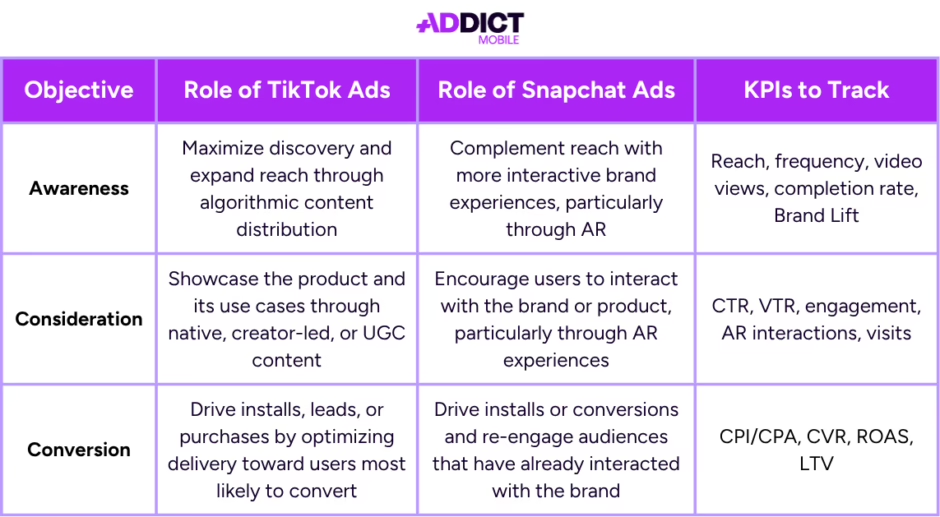
How Should You Split Your Budget Between TikTok Ads and Snapchat Ads?
When deciding between TikTok Ads vs Snapchat Ads in your media mix, the answer largely depends on performance. There is no universal budget split between TikTok Ads and Snapchat Ads. The weight of each platform should evolve based on the market, objective, and above all, observed performance. TikTok may, for example, take a larger share when the goal is to maximize reach, while Snapchat can be particularly valuable in markets where its penetration is high.
The approach: assign each platform a clear role and specific KPIs, test its contribution, then progressively reallocate budgets based on performance and measured incrementality.
TikTok Ads vs Snapchat Ads: What Are the Pros and Cons?
TikTok Ads and Snapchat Ads can serve similar objectives, but their strengths and limitations differ when it comes to scalability, creative, and market potential.
TikTok Ads: Pros and Cons
Pros:
- Strong scaling potential: the size of the audience and the power of the algorithm make it easier to scale volume.
- Rich creative ecosystem: Spark Ads, creator content, UGC, and trends provide plenty of opportunities to diversify concepts and hooks.
- Advanced automation: Smart+ streamlines targeting, delivery, and optimization.
Cons:
- High creative demands: scaling requires a significant volume of fresh creatives.
- Rapid creative fatigue: concepts and assets need to be refreshed regularly.
- Less manual control: the rise of automated solutions reduces some of the levers available to advertisers.
Snapchat Ads: Pros and Cons
Pros:
- Strong potential in certain markets: Snapchat can be particularly valuable in countries where penetration is high.
- AR differentiation: Lenses integrate the product or brand directly into the user experience.
- Complementary scaling channel: Snapchat can unlock additional volume beyond the main acquisition channels.
Cons:
- Potential varies significantly by market: Snapchat’s relevance needs to be assessed country by country.
- More demanding AR production: AR activations require more resources than standard video creatives.
- More limited trend ecosystem: TikTok offers a broader range of trends and creator content to fuel creative testing.
Our Recommendations for Testing TikTok Ads and Snapchat Ads
1. Set a Sufficient Test Budget to Generate Enough Signals
The minimum budgets shown by TikTok ($20–50/day) and Snapchat ($5/day) are enough to launch a campaign, but not necessarily to generate enough data to evaluate it. Plan for at least one week of testing and a budget that can generate several conversions per day, adjusted to your target CPA, geography, and optimization event.
2. Adapt Creative to Each Platform’s Native Language
On TikTok, focus on fast hooks, UGC, and content that follows the codes of the feed. On Snapchat, think camera-first, using interaction and AR when relevant. The same concept can be adapted across platforms, but its execution should be tailored to each one.
3. Use AR Lenses When They Genuinely Serve the Product
AR Lenses are particularly relevant when a product can be tried on, visualized, or placed in the user’s environment, for example in beauty, fashion, or home decor. Since they require more specialized production than standard video creatives, AR activations should serve a genuine product use case.
4. Allocate Budgets Based on Each Channel’s Role and Performance
Rather than setting a fixed TikTok/Snapchat split upfront, define a clear objective and specific KPIs for each activation, then adjust the allocation based on performance, scaling potential, and, where measurable, incrementality.
5. Think About Retargeting Across the Entire Media Mix
A user exposed to an ad on TikTok or Snapchat won’t necessarily convert on the same channel. Retargeting should therefore be considered across the entire media mix, incorporating Meta, Google, or other channels depending on the acquisition journey.
Conclusion: TikTok Ads vs Snapchat Ads: Which Platform Should You Choose?
There is no universal winner in the TikTok Ads vs Snapchat Ads debate. TikTok stands out for its scaling potential and creative ecosystem, while Snapchat can be particularly effective in certain markets and through its AR capabilities.
In short, TikTok Ads vs Snapchat Ads is not about two opposing choices, but two complementary levers. The right decision ultimately comes down to performance: test each platform’s contribution and adjust your investment based on the value it actually generates.
FAQ – TikTok Ads vs Snapchat Ads
TikTok Ads or Snapchat Ads: which platform performs better?
There is no single platform that consistently outperforms the other. TikTok Ads generally offers greater scaling potential, while Snapchat Ads can perform particularly well with certain audiences and in specific markets. Your choice should primarily depend on your objectives, target markets, and the performance observed during testing.
What budget should you set aside to test TikTok Ads and Snapchat Ads?
Platform minimums are not always enough to properly assess performance. Plan for at least one week of testing and a budget that can generate several conversions per day, then adjust it based on your target CPA, market, and optimization event.
Can you use the same creatives on TikTok Ads and Snapchat Ads?
The same concept can be adapted for both platforms, but the execution should reflect how each platform is used. TikTok favors fast hooks, UGC, and content that fits naturally into the feed, while Snapchat’s camera-first experience creates more opportunities for interaction and augmented reality.
Should you use TikTok Ads and Snapchat Ads together?
Yes, when both platforms align with your target audiences and markets. TikTok Ads and Snapchat Ads can play complementary roles in the media mix. The key is to measure each channel’s contribution, then reallocate budgets based on performance, scaling potential, and, where possible, measured incrementality.
Is Snapchat Ads still relevant?
Yes, but its potential depends heavily on the target market. Snapchat still has a large and engaged audience in certain markets, including France and Saudi Arabia, and stands out through its augmented reality formats. Its role in the media mix should therefore be assessed market by market, based on available audience and observed performance.