Digital Acquisition Agency to boost your revenue and growth
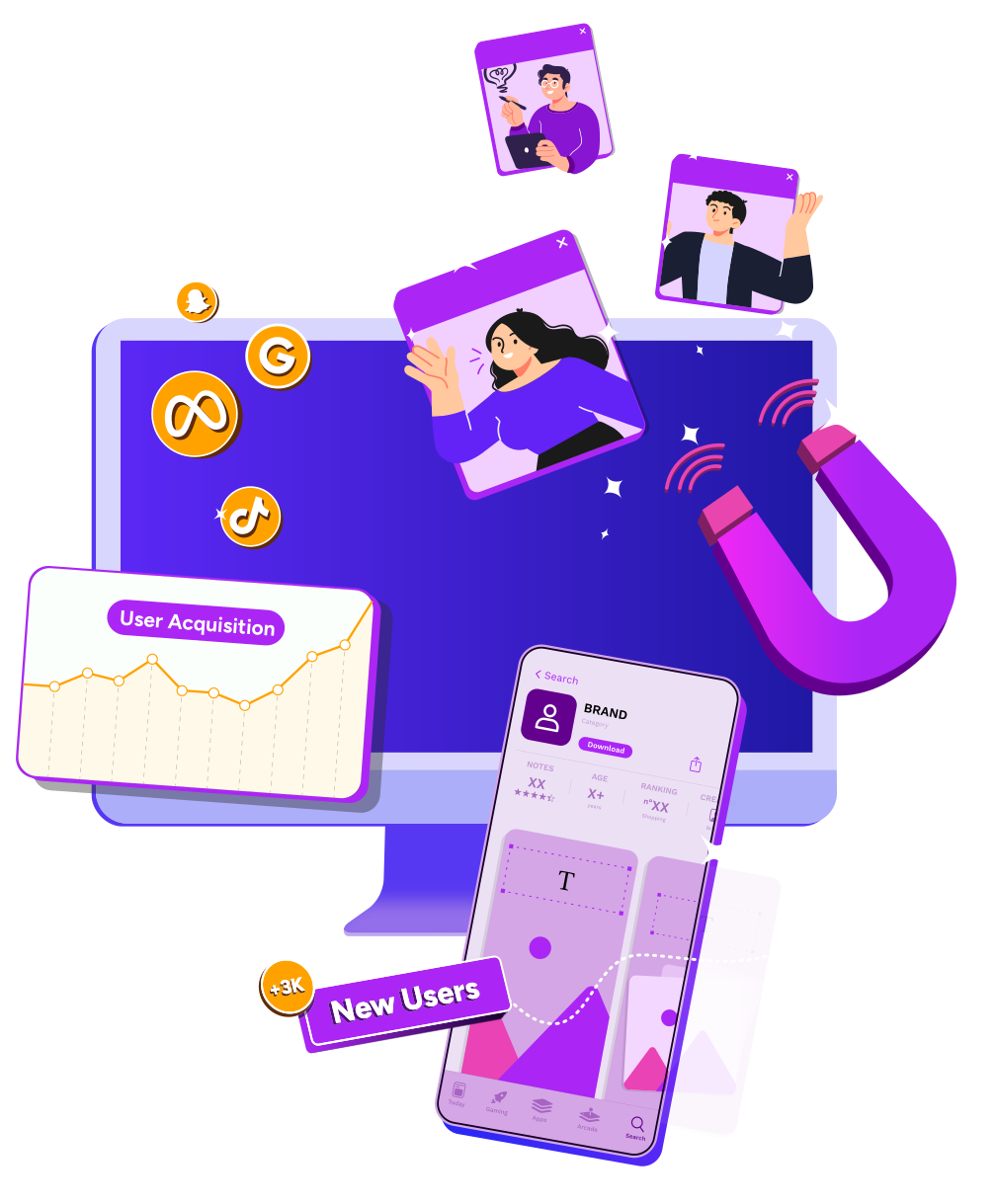
At Addict Mobile, a digital acquisition agency, we turn your user acquisition into a real driver of growth.
Whether on apps or the web, we design data-driven strategies to attract the right users, boost your performance and have a direct impact on your revenue.
-31%
fall in the CAC
80M+
Qualified users generated

A digital acquisition agency designed for performance
Generating traffic is no longer enough: the real challenge is acquiring the right users, at the right cost, and maximizing their value over time.
At Addict Mobile, we build acquisition strategies that are resolutely revenue-driven, not volume-driven. By combining data, creative, and media expertise, every action is aimed at a concrete goal: improving your performance.
From efficiency optimization to campaign scaling, our digital acquisition agency helps brands achieve sustainable growth, on app and web alike, with a full-funnel approach.
+301 %
Fall in the CAC
-40 %
Acquisition cost
80 M+
Qualified users generated
+61 %
Average improvement in ROAS
Structuring a profitable acquisition
Addict Mobile defines an approach aligned with your goals and revenue model, prioritizing the most impactful levers to accelerate your growth.
Media plan, budget allocation, KPIs, attribution models… Our digital acquisition agency implements a tailor-made strategy to drive your performance.
Continuously driving performance
Addict Mobile is a long-term partner: A/B testing, campaign, delivery, and investment optimization…
Our digital acquisition agency acts as an extension of your Growth team, managing your campaigns on a daily basis.
Fueling performance with unlimited creative
Our digital acquisition agency continuously produces and tests to identify the highest-performing creatives and fuel your campaigns with what truly works.
UGC, motion, static, CTV… our agency masters all formats and produces at scale to power all your campaigns, regardless of source or geo.
Identifying what truly drives performance
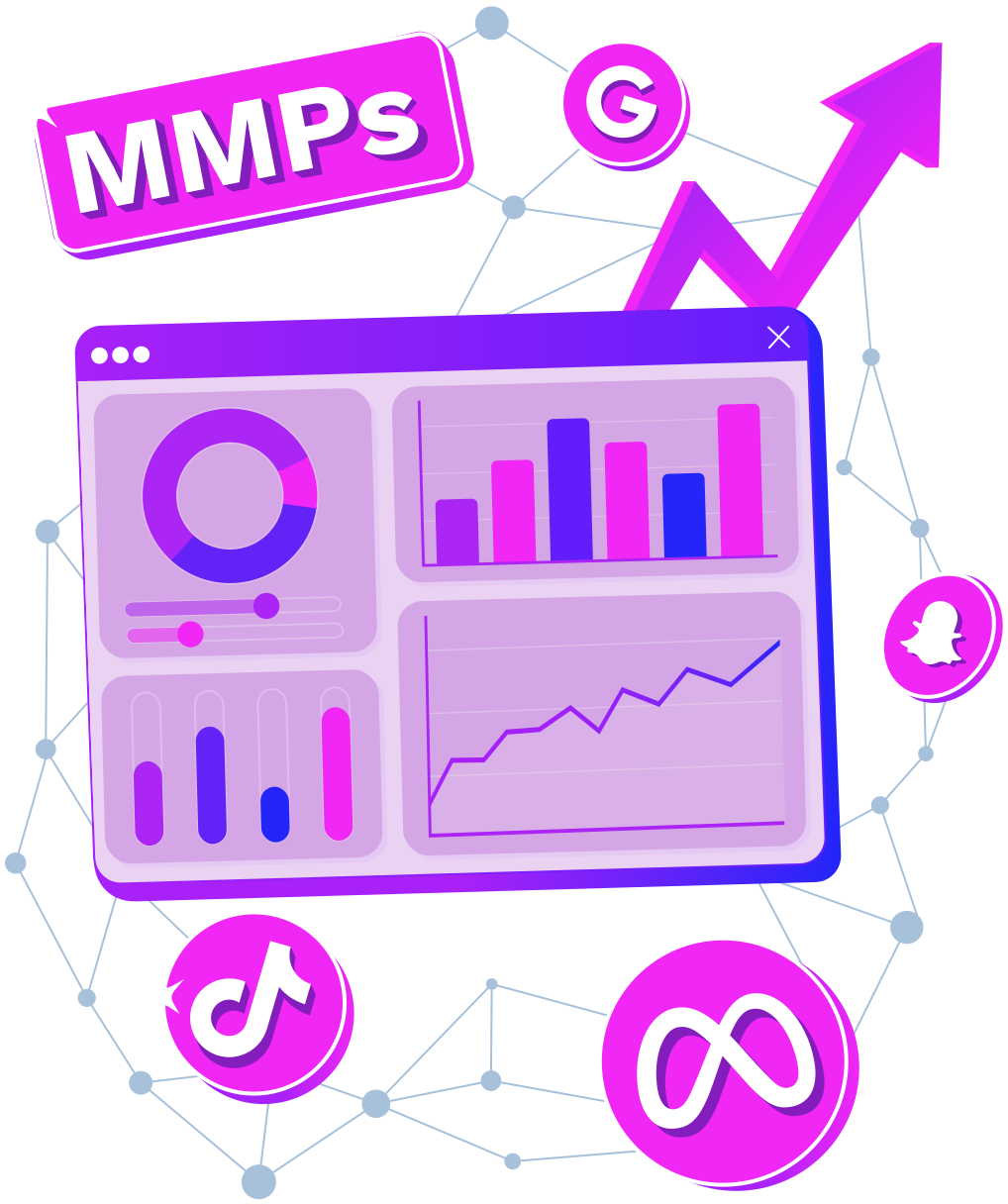
Addict Mobile’s value, as a digital acquisition agency, lies in our experts’ ability to aggregate data from various platforms and deploy models tailored to your environment (MMP, SKAdNetwork, and proprietary data).
The goal is to identify the true sources of performance and invest in the right levers.
Turning data into decisions
Data only has value when it’s put into action.
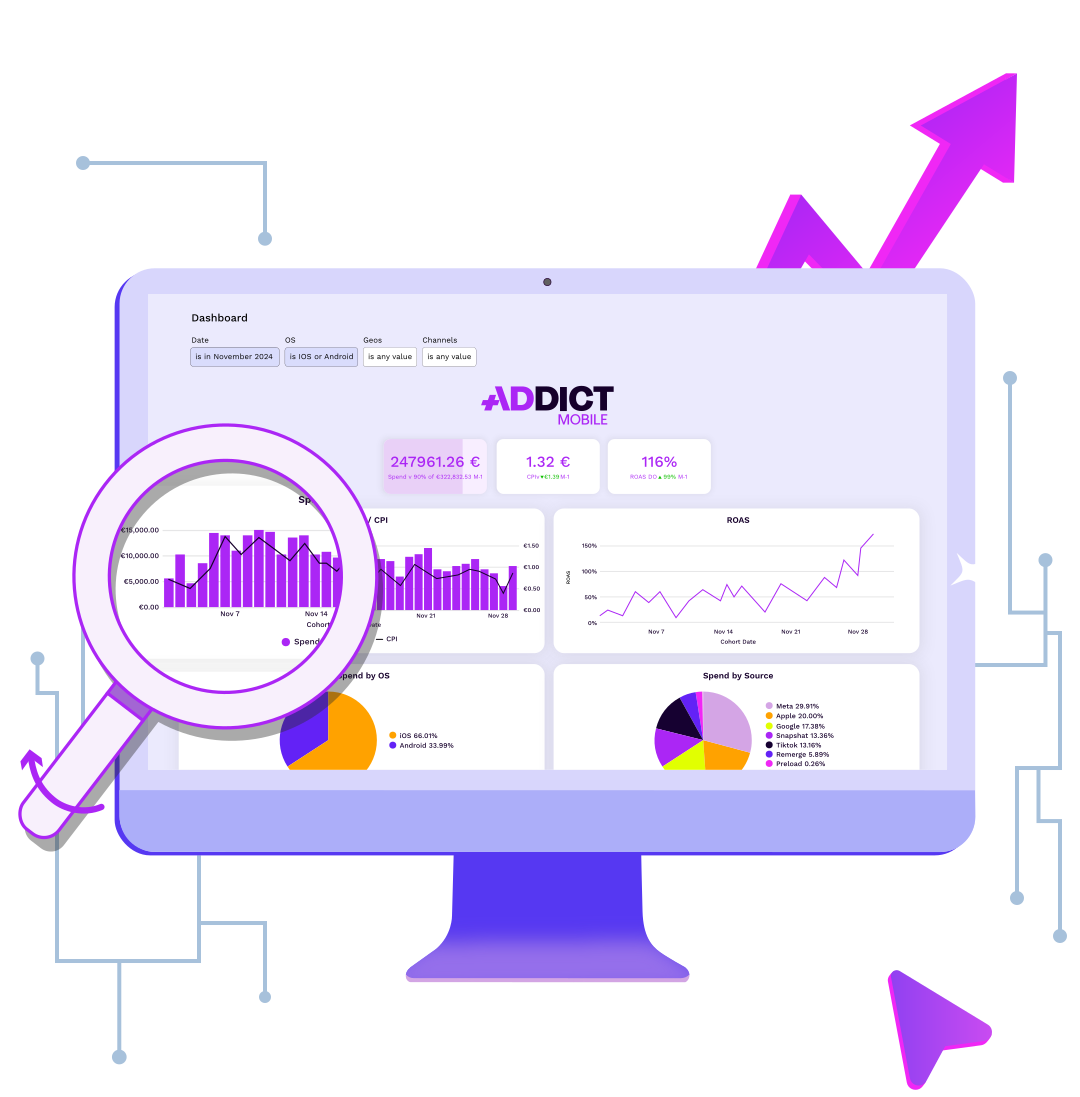
Addict Mobile has deployed custom analytics dashboards to track your performance on a daily basis.
Our experts detect key signals and adjust your strategy in real time to drive better results.
Scaling without compromising profitability
Scaling is one of the biggest challenges in acquisition.
The goal isn’t to burn through your budget from day one.
Addict Mobile, a digital acquisition agency, structures a progressive scale-up based on conclusive testing to grow your volumes without ever sacrificing performance.

Our data-driven, creative-centric, performance-focused approach
At Addict Mobile, acquisition is never based on intuition.
We combine data analysis, operational expertise, and creative production to build strategies that are immediately actionable. Every recommendation is designed to be tested, measured, and continuously optimized.
This approach allows us to adjust our decisions at the right time, seize opportunities, and drive sustainable growth in your performance.
As a partner of the leading platforms (Meta, Google, TikTok…), Addict Mobile gives you access to exclusive insights, early-access features, and strategic opportunities.
What our customers say about us

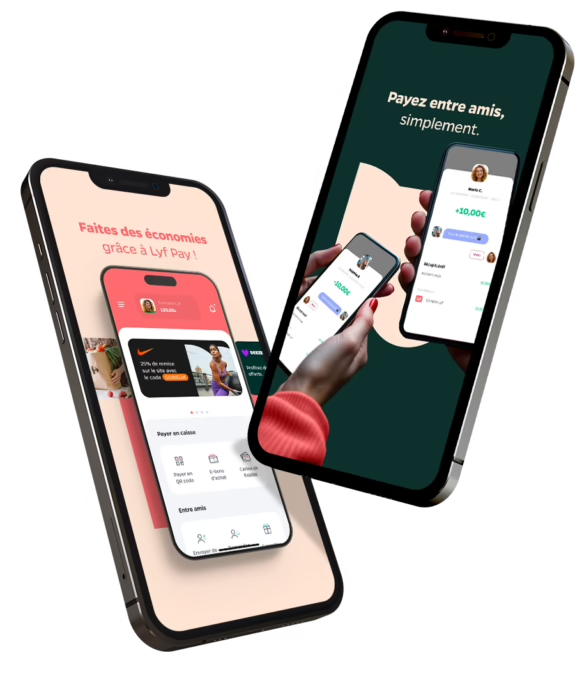
For the launch of Télérama Paris, Addict Mobile successfully combined the right budget allocation with continuous creative diversification to effectively support the launch of this new feature.
Annabelle Bizard
Head of Digital Marketing @Télérama
+250%
Budget in April
-18%
Meta CPI (last two weeks of April)
–24%
Meta CPA (last two weeks of April)
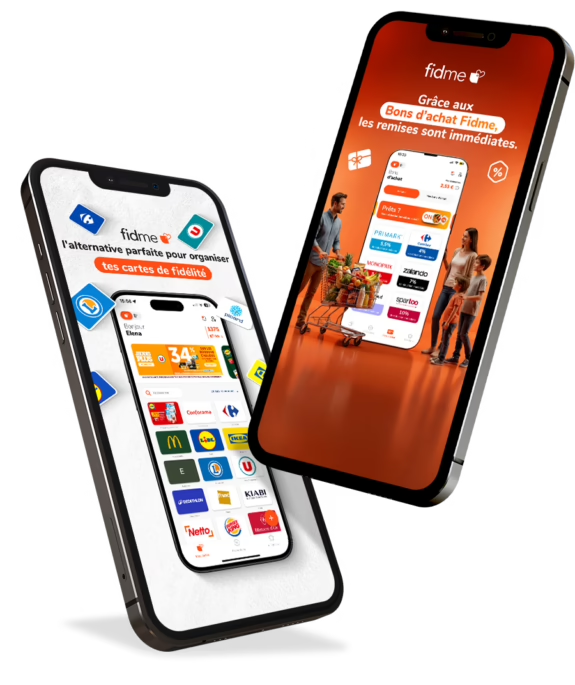
Addict Mobile provided us with an innovative user acquisition strategy focused first and foremost on retention and acquiring high-quality users. An approach fully aligned with our business challenges and our long-term growth objectives.
Sophie Descarrega
Mobile Marketing Director @Fidme
+26%
MAU
+8 points
retention at M+4
< 1,5 €
Average CPI on Google
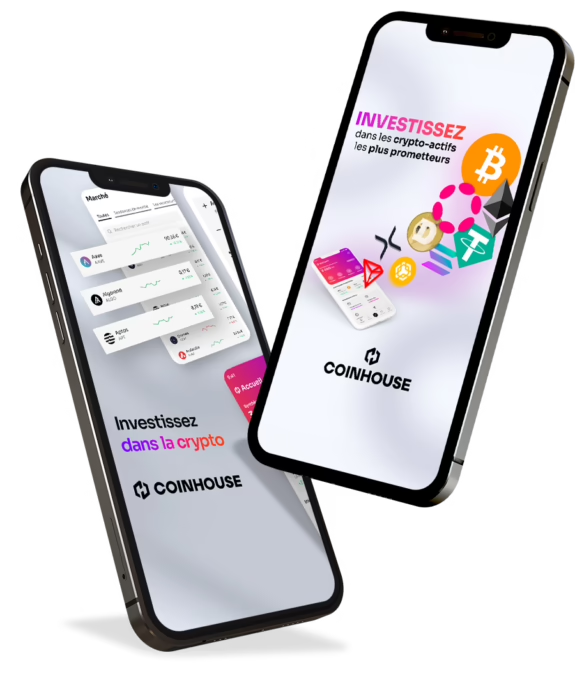
Addict Mobile supports us in an ever-evolving app and crypto environment. Their technical expertise, tracking mastery, and creative guidance have enabled us to sustainably improve our performance.
Jean Habasque
Head of Growth @Coinhouse
-36%
CPA in 4 month
-40%
CPI on creative tests
25%
of media mix (Tiktok)
A question about your mobile strategy?
Our experts help you identify the right acquisition levers, optimize your campaigns, and accelerate your app’s growth.
What is user acquisition?
User acquisition encompasses all the actions aimed at attracting new users through paid or organic channels. At Addict Mobile, a digital acquisition agency, it’s not just about volume, but above all about long-term revenue.
Why is acquisition key for performance?
User acquisition shapes both the quality and volume of your audience. A well-built strategy attracts high-value users who are more likely to convert and drive revenue.
How does Addict Mobile improve acquisition performance?
Addict Mobile combines data analysis, creative testing, media optimization, and a full-funnel approach to continuously improve your performance and return on investment.
How long does it take to observe first results?
Initial results can appear quickly, but a truly effective strategy is built over time. Addict Mobile takes a test & learn approach to progressively optimize performance and secure sustainable growth.
What sets Addict Mobile apart from other agencies?
At Addict Mobile, every strategy is built around revenue, not just volume. By combining data, unlimited creative, and media expertise within a dedicated team, backed by in-house technologies and a network of privileged partners, we turn acquisition into a true lever for profitable growth.
What budget do you need for digital acquisition?
There’s no universal budget: the right amount depends on your market, your revenue model, and your growth objectives. Addict Mobile helps you define a budget allocation aligned with your target profitability, then adjust it progressively based on results.
That said, to collect enough signal, we recommend a sufficiently substantial budget for signal collection.