6 performance marketing trends that will shape 2026
2026 is shaping up to be a pivotal year for performance marketing. With new growth channels emerging, AI-driven automation accelerating, evolving measurement models, and tighter regulatory frameworks, performance strategies will undergo major shifts.
Here are the key performance marketing trends for 2026 that will influence how teams manage, create, and optimise campaigns in a rapidly changing environment.
1. Campaign management
In 2026, advertisers will continue diversifying their channels and formats. The media mix is expected to expand with emerging, better-measured and more cost-efficient growth levers that can deliver additional volume.
Channels and levers to watch
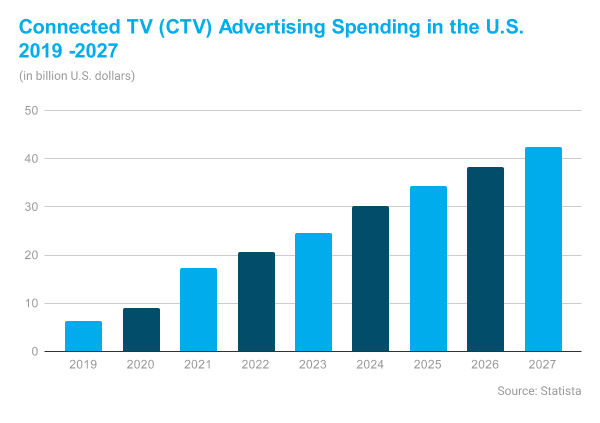
- CTV: CTV is expected to become even more integrated into UA strategies. It combines branding and performance, reaches less saturated audiences, and benefits from stronger measurement capabilities, making it fully actionable for performance. In the United States, CTV ad spend is projected to reach 33.35 billion dollars in 2025 and 42.4 billion dollars by 2027.
- RCS: iOS adoption could accelerate RCS usage. With close to 83 percent mobile coverage and read rates around 80 percent, this richer messaging format (videos, carousels, CTAs) could emerge as a strong lever for drive-to-store and e-commerce conversion.
- OEM placements: OEM placements on Android (preloads, suggestions, in-store) are expected to become a structural acquisition lever. OEM app stores provide high volumes in less saturated environments, with CPAs on average 30 percent lower than traditional channels. A relevant option for international launches in Android-dominant markets.
- WhatsApp Ads: The first advertising inventories opening on WhatsApp in 2025 could unlock new opportunities in 2026. Its global reach and high open rates make it a channel to watch, despite still-limited targeting options.
- DSP: DSPs may gain back momentum. Increased access to premium inventory (CTV, direct publishers) is making programmatic more reliable than before. A credible alternative to scale volumes and diversify investment.
Key takeaway
In 2026, the priority will be to diversify acquisition levers to secure volume while capitalising on emerging channels such as CTV, OEM placements, RCS, and premium programmatic.
2. Creatives & Influence
UGC and influence at the heart of dynamics
In 2026, UGC, influencer content, and authentic creative formats are expected to play an even more central role in performance marketing strategies. Brands will increasingly focus on producing more personified content that aligns with platform-native codes, with co-creation between advertisers and creators gaining momentum.
Following a more stable 2025, investments are likely to rise again: 72 percent of brands plan to increase their influencer marketing budgets, and 55 percent expect to boost UGC spending. The market is becoming more structured, with ongoing collaborations, content designed for paid amplification, and creators able to produce assets directly usable for UA.

Expanding collaboration tools
Brand–creator collaboration will be further supported by the growth of dedicated platforms, which will continue to expand in 2026: TikTok Creator Marketplace, Snap Creator Hub, Meta Collabs Manager, and others.
This dynamic is expected to accelerate, with the ecosystem continuing to grow through new features and tools designed to scale and streamline creative production.
Addict Mobile is already part of the TTCX programme (TikTok Creative Exchange), enabling fast activation of creators aligned with UA needs when relevant to the strategy. Contact us!
Key takeaway
In 2026, authentic formats will gain even more importance, with UGC, influencer content, and co-creation playing a reinforced role in producing assets truly aligned with platform-native behaviours.
3. AI and automation
Artificial intelligence is set to further accelerate campaign management and creative production in 2026. While it will not replace human expertise, it will enhance precision, execution speed, and the ability to test at scale.
Automating campaign management
AI is expected to be even more embedded in the algorithms of major advertising platforms. Models such as Meta’s Advantage+ or Andromeda will continue automating bidding, targeting, budgeting, and real-time optimisation. This evolution will also affect measurement, with solutions like Appsflyer’s Modern Marketing Cloud automating signal analysis and interpretation.
Optimising creative production and ideation
In the creative space, generative AI is likely to become a natural support for teams. It expands possibilities by generating assets, voice-overs, and UGC-style content while speeding up and enriching production workflows.
AI will also intervene earlier in the process as an ideation tool, capable of suggesting hooks, scripts, or creative angles, similar to solutions like TikTok’s Symphony.
Despite these advancements, human expertise will remain essential, from interpretation and strategic decision-making to creative direction and audience understanding. Strong performance will come from the complementarity between AI capabilities and human intuition.
4. Tracking, measuring and attribution
With the rise of automation and increasingly complex signals, 2026 is expected to mark a major shift in measurement. Advertisers will need more reliable indicators to understand the real value generated by each channel.
LTV and incrementality at the center of decisions
KPIs are expected to shift toward value metrics such as LTV, engagement, and incrementality, far beyond simple CPI. Incrementality tests and projection models will help estimate the profitability of a channel earlier, based on the first available signals. Meta has already integrated incremental attribution into its tools, reinforcing the growing importance of this approach.
AppsFlyer highlights this clearly:
« Incrementality shouldn’t be seen as a replacement for last-touch attribution. […] Using both together provides the most accurate picture for decision-making”. »
— Niv Reshef Klein, Head of Product, Incrementality – AppsFlyer
Analysis windows should also extend (30 to 60 days) to better capture long-term value in a context where immediate signals are less meaningful.
Server-side tracking to counter data loss
With the gradual disappearance of third-party cookies and stricter privacy rules, traditional tracking methods (pixels, cookies, browser-based tracking) are becoming less reliable. Server-side tracking, which sends events directly from the server rather than through the browser, is therefore expected to gain adoption in 2026.
This approach reduces data loss caused by ad blockers, browser restrictions, or client-side limitations, enabling a more complete and stable dataset to fuel campaign management and optimise investment.
Google Analytics: toward more unified cross-channel performance insights
The shift from Cost Data Import to Campaign Data Import expands the type of data Google Analytics can ingest: impressions, clicks, costs, and campaign information from other platforms (Meta, TikTok, programmatic, etc.).
In 2026, this evolution should facilitate more consolidated investment analysis by bringing together a broader set of signals and providing a more coherent view of overall ROI across channels.
Key takeaway
Measurement is shifting toward value. LTV, incrementality, server-side tracking, and cross-channel insights through GA will be essential to compensating for signal loss and accurately assessing profitability.
5. Legal framework and regulations
In 2026, the performance marketing landscape will evolve within a stricter regulatory environment, with potential impacts on traffic, costs, and monetisation strategies.
Restricted access to social platforms for minors
Bans on social media for users under 15 could intensify. The direct impact is likely to remain limited (targeting users under 18 is already prohibited), but indirect effects may emerge: lower traffic on certain platforms, pressure on costs if inventory decreases, and added complexity in audience management.
Australia has already restricted TikTok, Meta, Snap, YouTube, X, Kick and Reddit for users under 16, with an extension being considered for Google and Microsoft. Europe may observe these early markets to assess the potential impact before considering similar measures.
Digital Fairness Act (EU)
Still at the draft stage, the Digital Fairness Act aims to impose stricter rules on free-to-play game mechanics: limitations on loot boxes, reinforced policies for virtual currencies, and mandatory parental consent for minors.
If implemented, publishers will need to adapt their conversion and retention strategies. A short-term slowdown in in-app revenue is possible, although the measure may encourage a more transparente and sustainable model over time.
Key takeaway
Stricter regulations, particularly those concerning minors and in-app mechanics, will require advertisers to adjust their strategies to maintain performance, compliance, and transparency.
6. Key moments of the year: sports and media competitiveness
Major sporting events in 2026 (World Cup, Winter Olympics) are expected to create significant pressure on the media market. These periods will concentrate investments from many sectors, likely driving up CPMs and intensifying competition for inventory, particularly across video, social, and CTV.
Key challenges to anticipate
- Inventory will fill up faster, with costs likely to rise.
- Early planning and reservations will be necessary to secure volume.
- Creatives will need to align with the sports context to remain visible and competitive in highly crowded environments.
Brands able to adjust their buying timelines and contextualise their messaging to major sporting moments will be better positioned to absorb this pressure and maintain performance.
Key takeaway
Major sporting events will generate substantial pressure on inventory. Anticipating reservations and adapting creatives to the sports context will be essential to staying competitive.
Conclusion
Performance marketing in 2026 will be more automated, more regulated, and more demanding creatively. Brands that successfully combine data, innovation, and human agility will gain a competitive edge.
NEWS
Article in relation

Meta Ads vs Google Ads: which platform should…
In 2026, marketing performance no longer relies on a single channel. Effective strategies combine multiple levers that influence every stage of the user...
Published on 17 March 2026
Cheat Sheet #4: Everything You Need to Know…
Mother’s Day holds a unique position in the marketing calendar. Mother’s Day 2026 will once again be an emotional milestone before it becomes...
Published on 9 March 2026
Google Ads 2026: 4 Tips to Adapt to…
Google Ads remains a core pillar of performance marketing for many advertisers. The platform drives volume, captures strong intent, and directly contributes to...
Published on 3 March 2026